
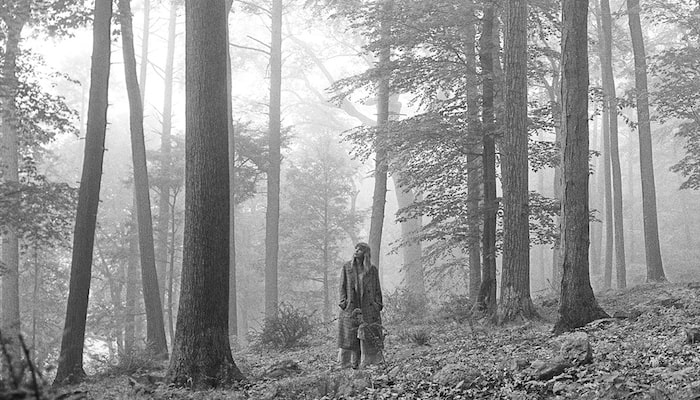
Taylor by all accounts is a lyrical genius. Like all truly great songs, Taylor Swift’s lyrics and melodies transcend genre, which is why ‘folklore’ is good and why Ryan Adams covers (despite his vileness as a human) of 1989 are so good. Girlfriend knows how to pack punches just specific enough to paint a clear narrative, and vague enough to make it your own. She is capable of writing lines that will stop you dead in your tracks, “If I’m dead to you why are you at the wake?” and lyrics that will stick with you well beyond a song’s conclusion, “If one thing had been different, would everything be different, today?” She’s an expert storyteller, slowly unraveling the tale until it blossoms into this beautiful rainbow of fullness and heaviness. The choruses are catchy and loaded, the bridges firing on all cylinders, like this one from illicit affairs — “Don’t call me kid, don’t call me baby. Look at this Godforsaken mess that you made me. You showed me colors you know I can’t see with anyone else.” I’m not crying, you’re crying.
Taylor is much younger than me and in the beginning of her career that fact worked in her favor. She brought me back to 13 when my life’s desires were to slow dance with JTT and ride my bike to McDonald’s. Her music effectively captured innocence in a bottle. It allowed me to escape my grown up problems and transport back in time to a simpler sweeter existence. It was liquid and record sales gold. As we aged, her popularity, fame and fortune grew and so did my expectations. It became apparent that maintaining her scarily squeaky clean image took precedence over taking a stand on anything other than herself. She would sign autographs for hours, go the extra mile for special fans, making sure that it was well documented online as proof of her virtue. None of that charade was authentic to me. The concerts that were more broadway production than musical performance, the subpar singing ability and performative friendships via Instagram were more than cringeworthy. Where did the country girl who played guitar and sang about boys breaking her heart go? Now she’s feuding with Kimye and Katy Perry? At a time when the world needed so much more than a petty pop star squabble, I was over her. ‘Reputation’ was full of garbage imitation pop songs that could’ve been penned as parody for SNL. Where Britney Spears had broken ground, T was rolling around in her dirt trying desperately to make a diamond. She came across as a selfish spoiled child throwing middle fingers at everyone for suffocating her with their attention, simultaneously screaming “Look at me, look at me!”
In 2017, Taylor was on the cover of TIME as a notable person of the #Metoo Movement for taking a radio DJ to court for groping her. On the one hand, I was, of course, happy that she wouldn’t let this douchebag get away with his vile behavior. She had every right to shut him down. But on the other hand, to have her championed as a hero of the Movement for it? In 2017 Taylor had six albums under her belt, was selling out stadiums and had amassed over 2 million in sales for ‘Reputation’ (the first album to do so since Adele’s ‘25’ came out in 2015!). Forbes called her “arguably the most famous and the most successful recording artist on the planet”. The other women of the #Metoo Movement had been taken advantage of by men in power. They didn’t initially report what happened to them for fear of ruining their careers, their reputations, and that no one would believe them. These are not issues Taylor was up against. Taylor was the “man in power” here. No one was going to refute her story — the court of public opinion would be without a doubt on her side. The DJ, comparably, was a nobody. To me, the heroes of that Movement are and always will be the women who stood up in the face of extreme adversity and punched it square in the jaw. That is not what Taylor did. She had a peon come at her and she squashed him like an ant at a picnic. Yes, kudos to her for taking a stand. No woman should be treated as she was, but a TIME cover she did not deserve.
When “You Need to Calm Down” came out, she finally took a stand on something (gay rights, a worthy cause and yet rather late to the party). The accompanying video was more PR stunt than a celebration of queer beauty; Ellen would beg to differ I’m sure and that’s fine. To me, she utilized the gay aesthetic for her own gain. It wasn’t really the political punch I so badly wanted her to throw, but we were making progress. It bothered me to no end that a white privileged woman would continuously refuse to speak out about important issues when so many young girls were looking to her guidance and to follow her lead. ‘Lover’, though musically worlds better than ‘Reputation’, still not much of a departure material-wise. The title track, arguably one of the best ones on the album, was a direct page from the Mazzy Star playbook — once again, her profits were merely copies of another person’s genius.
Fast forward to 2020. Now we know that the Kimye drama was manufactured by them to manipulate T (no surprise there). And in a 2019 interview with The Guardian, Swift revealed her reasoning for staying silent on politics was due to the boardroom suits drilling into her that having a political voice would be career suicide (à la Dixie Chicks). She also described essentially coming of age in the spotlight and how it stunted her emotional growth. She was 22 with the maturity of a 17-year-old. These revelations allowed me to empathize with her and at the very least understand the “Why?”s behind her action and non action. I felt myself starting to come back around.
To complete my T Swift 180, enter ‘folklore’, produced with the help of The National’s Aaron Dessner, with (gasp) a cameo by my be-all and end-all, Justin Vernon of Bon Iver. How convenient.
The excitement and fervor in the air with the anticipation of this album was palpable. I think T’s fans were bouncing off the ceiling and National fans were approaching with caution, but optimism. The result is nothing short of success. The combination of Dessner’s chilled out vibe and T’s lyrical prowess have created something worthwhile. Yet, I can’t seem to fawn all over it as others have been.
Things I love about it: I love “exile”, the track with Jdv of course. Hearing his slightly raspy baritone forming her words is really something. Taylor’s lyrical style is distinct, her signature in the phrasing unmistakable even on someone else’s tongue. The heartbreaking portrait they paint of this problematic relationship dissolving is a stunner. When the song bursts into its full bloom you can’t keep your gaze to the floor. You have to raise your chin to the sky because something otherworldly is coming out of the speakers. It’s a truly gorgeous piece of music.
I love “this is me trying”: the small signs coming through of Taylor’s more grownup self. She worked in a couple F-bombs on this album and they roll off her tongue more naturally than expected. There’s an acute self awareness happening on these tracks that is textbook for The National but new for Taylor. “I didn’t have it in myself to go with grace. You’re the hero flying round saving face,” and “My words shoot to kill when I’m mad. I have a lot of regrets about that.”
I love T’s continual throws of feminism. What started with “The Man” moved into “mad woman”. The line, “Women like hunting witches too, doing your dirtiest work for you” is a killer. This track hits patriarchy and sexism smack on the head. “Poke that bear ‘til her claws come out, and you find something to wrap your noose around. No one likes a mad woman, you made her like that.” The painfully accurate and succinct picture of the female condition she creates here is masterful. Thank you for this one, T.
Where the album falls short is that musically, there are no boundaries being pushed. She enlisted the help of one the premier bands of this genre to create this sound and they did it really well, but it’s also been done before. The through line from Lana Del Rey’s “Video Games” to “cardigan” is a straight one. ‘Mad woman’ also has a clear Lana feel. Cat Power, Phoebe Bridgers, Julien Baker learned to walk so T could run. The sparse guitar intro on ‘invisible string’ could’ve been taken directly from Sufjan’s “Should’ve Known Better”. ‘Folklore’ has 16 tracks, and everything after “mad woman “with the exception of “betty” is a snoozefest. “August” and “mirrorball” could’ve also easily been cut.
‘Folklore’ is exceptional lyricism, combined with beautiful safe production. It’s the kind of album you can really devote attention to and feel fulfilled or leave it on as dinner party background noise. On its own, it stands square and sturdy, reliable and pleasant with moments of unequivocal genius. That said, compared to other folk albums, is it the most devastating? No. Is it the most adventurous? No. Did she take the biggest risk pivoting from her typical style? No. The distance from country to indie folk is a short one, even if the optics appear differently. For albums that came out this year, I felt more power in The Chicks’ ‘Gaslighter’, more sass and savvy in Haim’s ‘Women in Music Pt III’, more boundary pushing and avant garde in Fiona Apple’s ‘Fetch the Bolt Cutters’ and more emotional depth in Phoebe Bridgers ‘Punisher’. Maybe that says more about those albums than ‘folklore’, but true nonetheless.
In the end Taylor’s music has lost its relatability. When her music was about white horses, feet on a dashboard and slamming screen doors, those things that resembled my childhood (and everyone else’s). Once she started writing about calling out haters, slamming her critics and whining about the consequences of fame, we could no longer relate, nor care about her “mo money, mo problems” woes. Now with ‘folklore’, she’s still grappling with the struggles of a young woman coming into her own and wrestling with her own shortcomings. When she grows tired of revealing herself, she turns to other people’s stories (“betty”, “last great american dynasty”, “epiphany”). Storytelling is a long-standing tradition in country music and Taylor is one of its great orators. That said, her stories don’t always resonate with this particular 37-year-old mom who’s been fortunate to have passed all the relationship bullshit that precurses finding a life partner. As an Asian woman I find it harder and harder to see myself (even my past self) in this white woman born into great privilege, who has turned to wielding her fan base as a weapon against her enemies. Miss Americana, indeed.
 sarahowrites.com